
Where a complaint goes: the FSCA and the FAIS Ombud
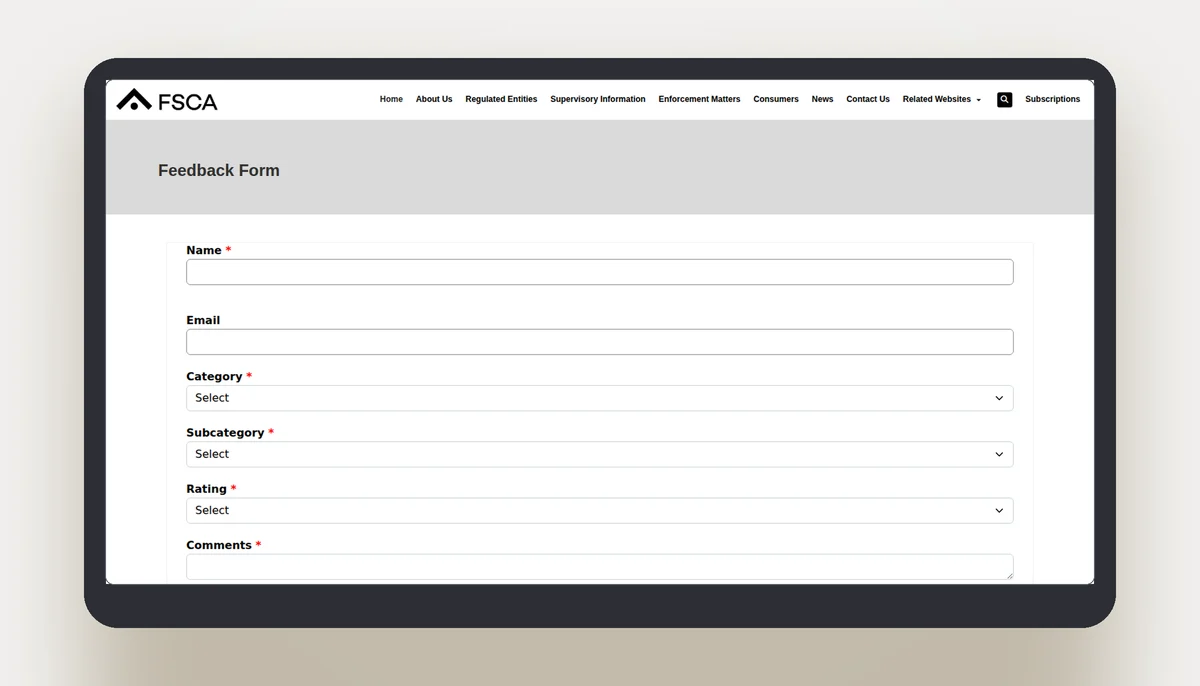
If something goes wrong with a licensed adviser or firm, there are routes to complain. This page explains where a complaint goes, why the routes apply only to authorised entities, and what that means for an unlicensed platform.
The firm's own complaints process first
The first step is the firm's own complaints process. A licensed financial services provider must have a complaints policy. The policy should say how to lodge a complaint, how long the firm will take to respond, and what to do if you are not satisfied. The reader should ask the firm for its complaints policy before lodging a complaint.
The firm's complaints process is the fastest route. The firm may resolve the complaint without the need for an ombud. The reader should keep a record of all correspondence with the firm. If the firm does not respond or the reader is not satisfied, the reader can go to the ombud.
The FAIS Ombud for complaints about licensed firms
The FAIS Ombud deals with complaints about licensed financial services providers and their representatives. The ombud can investigate complaints about advice, intermediary services, and other activities covered by the FAIS Act. The ombud's service is free to complainants.
The ombud can only deal with complaints about authorised entities. If the entity is not authorised, the ombud cannot help. The reader should check the FSCA's register to see if the entity is authorised before lodging a complaint with the ombud.
The FSCA for the regulator
The FSCA is the regulator. It supervises authorised entities and enforces the FAIS Act. The FSCA can investigate breaches of the Act and can take action against authorised entities. The FSCA also deals with unauthorised entities by issuing warnings and referring cases to the police.
The FSCA is not a complaints body. It does not resolve individual complaints. The reader can report an unauthorised entity to the FSCA, but the FSCA will not get the reader's money back. The FSCA's role is to protect the public by regulating the industry.
Why these routes apply only to authorised entities
The FAIS Ombud and the FSCA's supervisory powers apply only to authorised entities. The FAIS Act covers financial services providers that are licensed by the FSCA. If an entity is not licensed, the FAIS Act does not apply to it. The ombud cannot investigate a complaint about an unlicensed entity because the ombud's jurisdiction is limited to licensed providers.
The FSCA can investigate an unlicensed entity for operating without a licence, but it cannot resolve a complaint about that entity. The FSCA can issue a warning and can refer the matter to the police, but it cannot order the entity to refund money. The reader should be aware that dealing with an unlicensed platform means losing the protection of the FAIS Act.
What that means for an unlicensed platform
If the platform is unlicensed, the reader cannot go to the FAIS Ombud. The reader can report the platform to the FSCA, but the FSCA will not resolve the complaint. The reader may have to go to court, which is expensive and slow. The reader may not get any money back.
The reader should therefore check the platform's licence before sending money. If the platform is not licensed, the reader should not expect any help from the ombud or the FSCA. The reader should also be aware that no route guarantees a refund, even for licensed firms.
No route guarantees a refund
No route guarantees a refund. The FAIS Ombud can recommend that a firm compensate a client, but the ombud cannot force the firm to pay. The FSCA can fine a firm, but the fine goes to the state, not to the client. A court can order a firm to pay, but the firm may not have the money.
The reader should not assume that a complaint will result in a refund. The best protection is to avoid dealing with unlicensed platforms and to read the terms before investing. The reader should also keep records of all transactions and correspondence.
A complaint reaches the FAIS Ombud only when the firm was authorised at the time of the advice or service
The Ombud's office opens a file only if the entity was a licensed financial services provider when the conduct occurred. A platform that was never authorised, or whose licence had lapsed or been withdrawn, sits outside the Ombud's jurisdiction. The date of the advice or the transaction, not the date of the complaint, determines whether the Ombud can hear the matter.
Readers often assume that a current FSCA authorisation on a website is enough. The Ombud looks at the register as it stood at the time of the conduct. If the firm was not authorised then, the complaint is declined at intake. This is a hard filter, not a discretionary one.
For an entity that was authorised but later lost its licence, the Ombud may still consider complaints about conduct while the licence was active. The complaint must point to a date within the authorised period. A single day outside that window can end the matter.
The FSCA can investigate, but it cannot force a refund or recover your money
The FSCA's powers include enforcement action, suspension or withdrawal of licences, and administrative penalties. What it cannot do is order a firm to repay a client. A complaint to the FSCA may lead to regulatory action, but the client's funds are not returned through that route.
A reader who has lost money to an unauthorised platform and reports it to the FSCA is providing intelligence, not opening a compensation case. The FSCA may issue a warning, refer the matter to the police, or open an investigation, but the outcome does not include restitution.
This distinction matters because platforms sometimes tell clients to complain to the FSCA as though the regulator will adjudicate and pay out. The FSCA is not a court and not a compensation fund. Its role is to protect the market, not to repair individual losses.
The Ombud's process is free, but it does not investigate and it does not chase the firm for you
The FAIS Ombud does not charge a fee, but the complainant must do the work of gathering documents, stating the facts, and showing what was lost. The Ombud's office is not an investigator; it is an adjudicator that weighs what is put before it. A complaint without a clear chronology and supporting evidence is likely to be dismissed.
The office will not phone the firm and demand an explanation on your behalf before you file. It expects you to have attempted the firm's own complaint process first, and to attach the firm's response or a record of your attempt. A complaint that skips that step is often sent back.
This is a paper-based process. Hearings are rare, and most matters are decided on the documents. The Ombud can make a determination, but enforcing it against a firm that has closed its doors or moved offshore is a separate and difficult step.
A determination by the Ombud is binding only if the firm accepts it; otherwise you are back to court
The FAIS Ombud can issue a determination, but the respondent firm has the right to object. If the firm objects, the matter is referred to the Financial Services Tribunal, and from there it can go to the ordinary courts. The Ombud's decision is not automatically final.
Many readers believe the Ombud acts like a small claims court with the power to order payment. In practice, a firm that is still trading may comply because it wants to avoid regulatory scrutiny, but a firm that has disappeared or is unlicensed can simply ignore the determination.
Even a favourable determination does not guarantee payment. The Ombud does not hold funds and cannot attach a bank account. Enforcing a determination against a non-compliant firm requires a further legal process, which the complainant must initiate and fund.
Complaining to the FSCA about an unlicensed platform helps other readers, but it does not open a case for you
A report to the FSCA about an unlicensed platform may add to the warnings list or support an investigation. That helps the next reader who searches before depositing. But the person who files the report is not a party to any enforcement action and receives no status updates.
The FSCA does not confirm receipt of every complaint, and it does not tell a complainant what it is doing about a particular platform. The silence is not an indication that nothing is happening, but it also means the complainant cannot rely on the FSCA for a personal remedy.
This is a one-way street. You give the regulator information; the regulator acts in the public interest. The individual loss does not become a claim simply because the FSCA later issues a warning or takes action.
The order of operations matters: complain to the firm, then the Ombud, and only then consider the FSCA
The Ombud requires a complainant to have first lodged a formal complaint with the financial services provider and given the provider a chance to respond. The provider's own complaints process, if it exists, must be exhausted or shown to be unavailable before the Ombud will accept the matter.
The FSCA is not an appeal body for Ombud decisions, and it does not take over a complaint that the Ombud could handle. Going to the FSCA first does not preserve your Ombud claim; it can delay it. The FSCA may tell you to go to the Ombud and close its file.
For an authorised firm, the correct order is firm first, then Ombud. For an unlicensed platform, the Ombud has no jurisdiction, so the FSCA is the only regulatory route, but it remains an information channel rather than a complaints mechanism.
The FAIS Ombud cannot order a firm to pay a refund if it has no money left
A determination in your favour is only the first step. The Ombud can tell a firm to compensate you, but the office does not hold the firm's funds and cannot force payment out of an empty account. If a licensed firm has been trading while insolvent, or if the key individual has moved all client money out of the business, the Ombud's ruling may be worth very little. The office will publish the determination, but that does not turn it into cash.
This is why the order of operations matters. Before you spend months on a complaint, check whether the firm still appears on the FSCA register and whether its licence is still listed as authorised. A firm that has had its licence withdrawn or has gone into liquidation will not suddenly find the money to pay you. The Ombud's process works best when the firm is still operating and wants to keep its licence clean, because a determination against it becomes part of the public record.
For a licensed firm, the Ombud's ruling carries weight with the FSCA. The regulator can take the determination into account when the firm next applies to renew its licence or when it is reviewed. That gives a solvent firm a reason to settle before the final ruling. But if the firm has already closed, the route ends at a paper finding. The Ombud cannot chase directors personally, and it cannot attach assets held in other names.
A complaint to the FSCA does not pause a firm's licence or freeze its operations
Readers sometimes expect that once the FSCA receives a complaint, the firm will be stopped from trading while the matter is investigated. That is not how the process works. The FSCA receives a large volume of complaints, and each one is assessed against its own mandate. A single complaint about a disputed trade or a slow withdrawal does not automatically trigger a licence suspension. The firm can continue operating while the complaint sits in the queue.
The FSCA's enforcement powers are reserved for patterns and for breaches of the financial sector laws, not for individual disputes about whether a trade should have been executed. If many complaints arrive about the same firm and the same conduct, the regulator may open a broader investigation. But that investigation can take a long time, and during that period the firm's licence remains active unless the FSCA takes formal suspension or withdrawal action, which requires its own process.
This means a complaint to the FSCA is not a protective measure for your funds. It is a report that may contribute to future regulatory action. If your goal is to stop the firm from taking in more clients while you try to recover your money, you need to look at the Ombud route or at a court interdict. The FSCA will not step in to freeze the firm's bank account simply because you have filed a complaint.
Complaint facts
Read next
Common questions about FSCA checks
What is the FAIS Ombud?
The FAIS Ombud is a free service that deals with complaints about licensed financial services providers and their representatives. The ombud can investigate complaints about advice and intermediary services. The ombud's jurisdiction is limited to authorised entities.
Can I complain about an unlicensed platform?
You can report an unlicensed platform to the FSCA, but the FSCA will not resolve your complaint. The FAIS Ombud cannot deal with unlicensed entities. You may have to go to court, which is expensive and slow.
Does the FSCA help with individual complaints?
No. The FSCA is the regulator, not a complaints body. It supervises authorised entities and issues warnings about unauthorised entities. It does not resolve individual complaints or get money back for clients.
Will the ombud guarantee a refund?
No. The ombud can recommend that a firm compensate a client, but it cannot force the firm to pay. No route guarantees a refund. The best protection is to avoid unlicensed platforms and read the terms.
What should I do before complaining?
First, use the firm's own complaints process. Keep a record of all correspondence. If the firm does not resolve the complaint, you can go to the FAIS Ombud if the firm is licensed. If the firm is not licensed, report it to the FSCA.
A trading account is a decision, not a sign-up
Opening a CFD account means accepting leverage and the risk of losing the money you deposit. Before you open one, run the licence checks this site describes and read the client agreement and risk warning carefully.