
What an FSCA warning cannot tell you
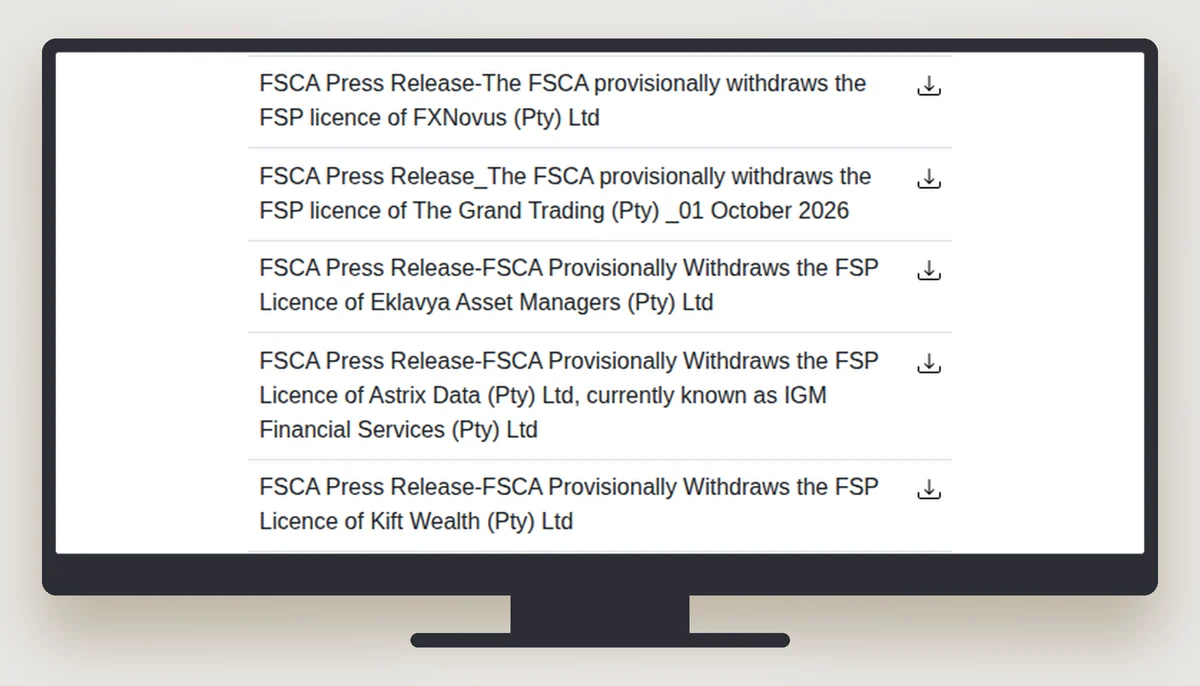
A warning is a public notice, not a verdict. This page explains what a warning cannot tell the reader, how to read the date, and how to compare details.
A warning is not a court finding
An FSCA warning is not a court finding. It is a statement by the regulator that an entity is not authorised or is impersonating an authorised one. The FSCA does not need to prove its case in court before issuing a warning. The warning is based on the FSCA's own assessment.
The warning does not mean the entity has been found guilty of any crime. It does not mean the entity is a scam or a fraud. The FSCA does not use those words. The warning is a notice to the public to be cautious. The reader should not conclude that the entity is a scam from the warning alone.
A warning may be older than the platform's present form
A warning carries the date the FSCA published it. The platform may have changed its name, its website, or its contact details since the warning was published. The platform may have stopped operating. The platform may have applied for a licence and been authorised.
The reader should compare the details in the warning with the platform's current details. If the platform's current details are different, the warning may not apply to the current platform. The reader should check the FSCA's register to see the current status of the entity.
The absence of a warning does not authorise anything
The absence of a warning does not mean the platform is authorised. The FSCA cannot warn about every unauthorised entity. A platform can operate without a warning against it. The FSCA may not have come across the platform yet. The FSCA may have decided not to warn about it.
The reader should not assume that a platform is safe because there is no warning. The reader should still run the licence check: find the FSP number and exact legal name, search them on the FSCA's register, and compare the details.
How to read the date on a warning
The date on a warning is the day the FSCA published it, not the day the entity started operating. The date tells the reader when the FSCA looked at the entity. The warning may be old, and the entity may have changed since then.
The reader should also check whether the FSCA has withdrawn the warning. The FSCA can withdraw a warning if it later finds that the entity is authorised. A withdrawn warning may still appear in older copies of the table. The reader should check the FSCA's own site for the current version.
How to compare details
To compare details, the reader should look at the name, the website, and the contact details in the warning. The reader should compare these with the platform's current details. If the details match, the warning is likely about the current platform. If the details do not match, the warning may be about a different entity.
The reader should also compare the FSP number if the warning gives one. The FSP number is a unique identifier. If the platform uses the same FSP number, the warning is about that platform. If the platform uses a different number, the warning may be about a different entity.
What to do with a warning
A warning is a signal to be cautious. The reader should not send money to an entity that is the subject of a warning. The reader should also not assume that the entity is safe just because there is no warning. The reader should run the licence check and read the terms before deciding.
The reader should also report any suspicious platform to the FSCA. The FSCA's warnings page is the authoritative source for warnings. This site's table is a convenience, but the FSCA's site is the final word.
A warning does not freeze a platform's behaviour
A warning is a snapshot of the regulator's knowledge at a point in time. After publication, the people behind a platform can change its trading name, move to a new domain, or start offering a different product. The warning remains attached to the original details, so a reader who only searches the old name may think a platform has disappeared. In practice, the same operation often continues under a new banner while the old warning quietly gathers dust.
The FSCA does not promise to update every warning when a platform changes its appearance. Some warnings are revised, but many are left as they were first published. A platform that was warned about offering contracts for difference may later promote forex signals or copy trading without a fresh warning appearing. The absence of a new warning does not mean the new activity has been checked or cleared.
Readers should treat a warning as a starting point, not a final word. If a platform was warned under one name, check whether the same contact details or key individuals appear under another name. A warning is useful only when it is compared against the platform's current form, not when it is read as a permanent label.
A warning says nothing about the platform's financial condition
A warning describes a regulatory breach, not the health of the business. A platform may be warned for operating without a licence while still holding client money in segregated accounts and processing withdrawals normally. Conversely, a platform may have a clean record with the FSCA and still be insolvent. The warning does not tell you whether the platform can pay out the money it holds.
The FSCA's warning process does not involve auditing the platform's balance sheet or checking its liquidity. The regulator acts when it sees unlicensed activity or misleading claims, not when it has evidence that client funds are missing. A warning may be issued long before any financial problems become visible, or long after they have already started.
Readers who rely on a warning to judge safety are reading the wrong signal. A warning answers one narrow question: has the FSCA publicly stated that this entity is not authorised for a particular activity? It does not answer whether the entity is solvent, whether it segregates client funds, or whether it can meet its obligations.
A warning may cover only one part of a wider operation
A single platform can run multiple websites, brands, or legal entities. The FSCA may warn about one of them without mentioning the others. A reader who checks only the warned entity may conclude that the rest of the operation is clean, when in fact the same people are behind all of them. The warning is scoped to what the regulator found and chose to publish.
The FSCA does not always map the connections between related entities in a warning. If a firm operates under three trading names and only one is warned, the other two may still be unlicensed. The regulator may not know about the other names, or may not have gathered enough evidence to include them. The warning is not a statement that the other names are authorised.
To use a warning properly, look beyond the named entity. Check the website's contact details, the names of key individuals, and the payment methods offered. If the same phone number or bank account appears on a different platform, the warning may be relevant there too, even though the name is different.
A warning cannot tell you which products are actually covered
A warning may say that a platform is not authorised to offer 'financial services' without specifying which products are involved. A platform might be warned for offering forex trading but also be pushing crypto assets or binary options. The warning does not itemise the full range of products, so a reader cannot assume that only the mentioned product is problematic.
The FSCA's warnings often use broad language because the regulator's concern is the lack of a licence, not the specific product. The same platform may be offering several unlicensed products at once, and the warning may mention only the one that triggered the investigation. The other products may be equally unlicensed but are not named.
Readers should not treat a warning as a product list. If a platform is warned for one activity, assume that its other activities may also be unlicensed unless the FSCA's register shows otherwise. The warning is about the entity's status, not about the safety or legitimacy of any particular product.
A warning does not guarantee that the FSCA is pursuing enforcement
A warning is a public notice, not a court order. The FSCA may issue a warning and then take no further action, or it may refer the matter to the National Prosecuting Authority, or it may simply wait for the platform to stop operating. The warning itself does not tell you what the regulator is doing behind the scenes. Some warnings lead to enforcement; many do not.
The absence of visible enforcement after a warning does not mean the platform has been cleared. The FSCA's enforcement process is slow and often confidential. A platform may continue to operate for months or years after a warning while the regulator builds a case or negotiates. The warning is not a promise that the platform will be shut down.
Readers should not interpret a warning as a sign that the platform is about to disappear. It is a signal that the platform is not authorised, but it does not mean the regulator has the resources or the legal power to stop it. The warning is one piece of information, not a forecast of enforcement.
A warning does not relieve you of checking the register
A warning is a shortcut that can mislead if used alone. The FSCA's register of authorised financial services providers is the authoritative source for whether a firm is licensed. A warning may be outdated, incomplete, or apply to a different entity. Checking the register is the only way to see the current status of a platform's licence.
Some readers assume that if a platform is not in the warnings table, it must be authorised. That is false. The FSCA does not warn about every unlicensed platform, and many unlicensed platforms never appear in a warning. The warnings table is a subset of the regulator's concerns, not a complete list of unauthorised entities.
The correct order is to check the register first, then the warnings. If the platform is not on the register, it is not authorised, regardless of whether a warning exists. If it is on the register, check the licence categories and contact details. A warning can add context, but it cannot replace the register.
A warning often carries no detail about the conduct that triggered it
The FSCA's warning page typically says that an entity is not authorised, but it seldom explains what the entity did to attract the regulator's attention. The warning may mention 'soliciting clients' or 'offering financial services' without describing the specific product, the size of the loss, or the number of complainants. This absence of detail is deliberate: the FSCA avoids publishing information that could prejudice an ongoing investigation or expose complainants. A reader who wants to understand the gravity of the warning must therefore look elsewhere, and the warning itself will not help.
Because the warning does not describe the conduct, a reader cannot tell whether the regulator acted on a single complaint or on a pattern of complaints. A platform that received one warning years ago for a minor administrative lapse may sit next to a platform that was warned last week for misappropriating client funds, and the two entries will look much the same. The warning page is a blunt instrument, not a calibrated one. It flags a problem without measuring it, which means the reader has to treat every warning as equally serious until proven otherwise.
The practical consequence is that a warning cannot be used to rank platforms by risk. A reader who finds three warnings on three different platforms cannot say which is the worst offender, because the FSCA has not published the evidence. The only safe assumption is that any warning is a red flag, and that further checking is required. The warning tells you that the FSCA has acted; it does not tell you why, and it does not tell you how much weight to give that action.
Warning limits
Read next
Common questions about FSCA checks
Is a warning a court finding?
No. A warning is a statement by the regulator that an entity is not authorised or is impersonating an authorised one. It is not a court finding and does not mean the entity has been found guilty of any crime.
Can a warning be old?
Yes. A warning carries the date the FSCA published it. The platform may have changed since then. The reader should compare the details in the warning with the platform's current details.
Does no warning mean safe?
No. The absence of a warning does not mean the platform is authorised. The FSCA cannot warn about every unauthorised entity. The reader should still run the licence check.
How do I read the date?
The date is the day the FSCA published the warning. It is not the day the entity started operating. Check whether the FSCA has withdrawn the warning on its own site.
What should I do if I see a warning?
Be cautious. Do not send money to an entity that is the subject of a warning. Run the licence check and read the terms. Report suspicious platforms to the FSCA.
A trading account is a decision, not a sign-up
Opening a CFD account means accepting leverage and the risk of losing the money you deposit. Before you open one, run the licence checks this site describes and read the client agreement and risk warning carefully.